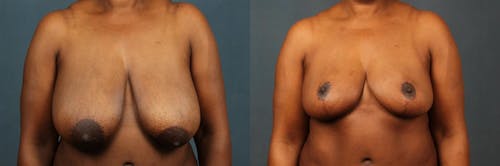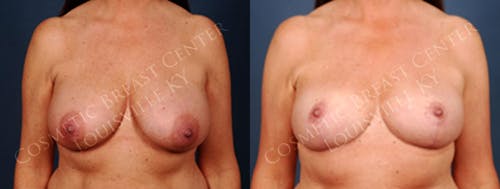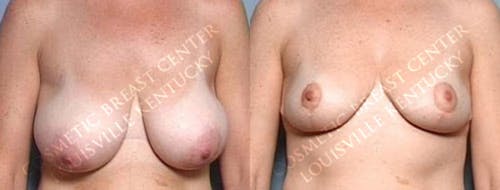

A breast reduction usually brings immediate and dramatic reshaping to a woman’s figure, along with relief from the discomfort of excessively large breasts.

Breast Reduction Before & After
Warning:
This gallery contains nudity. Please click OK to confirm you are at least 18 years of age and are not offended by this material.
Breast Reduction FAQs
What will happen at my first appointment?
In addition to gathering your medical history, you and your plastic surgeon will discuss your desired results of surgery, the options available to achieve those results, factors related to preparing for surgery, recovery, and risks associated with the procedures. In discussing your expectations during your first visit, it is important to agree on the desired size and shape for the new breasts, as each patient and each plastic surgeon has a different opinion. Your plastic surgeon will examine and measure your breasts and discuss in detail the variables of the surgical options, including repositioning the nipple/areola during the procedure. Anesthesia, where the surgery will be performed, and what, if any, guidelines your insurer has for the percent of tissue removal needed for coverage will also be discussed.
Will health insurance pay for breast reduction surgery?
In many cases, this procedure is covered by insurance. Dr. Calobrace and Dr. Quintero do not participate directly with any insurance company.
What do I need to do to prepare for my surgery?
You may be asked to have a mammogram, and you will receive instructions for the days leading up to surgery, including suggestions for eating, drinking, smoking, and taking or avoiding certain vitamins and medications. Typically, a blood transfusion is not part of a breast reduction procedure, but circumstances may exist where you will be advised to have a unit of blood drawn in advance. You’ll need to arrange for transportation home after surgery and in-home care from a responsible adult for a few days.